
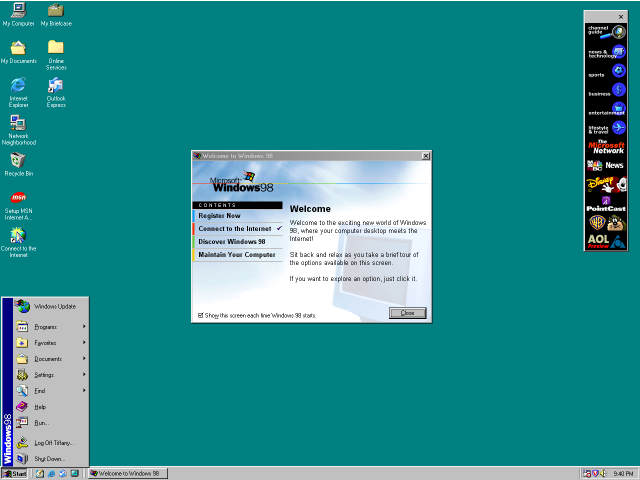
In 1999, Microsoft released Windows 98 Second Edition, an interim release. One of the more notable new features was the addition of Internet Connection Sharing, which was a form of network address translation, allowing several machines on a LAN (Local Area Network) to share a single Internet connection. Second Edition was also much easier to use and much smoother than the first edition of Windows 98. Hardware support through device drivers was increased. Many minor problems present in the original Windows 98 were found and fixed which make it, according to many, the most stable release of Windows 9x family—to the extent that commentators used to say that Windows 98's beta version was more stable than Windows 95's final (gamma) version.

0 comments:
Post a Comment